

The 139th Canton Fair in 2026 promises exciting trends for Storage Containers. Held from April 15 to May 5, the event showcases advancements in manufacturing and home goods. With a focus on smart solutions, exhibitors will include innovative storage designs.
AI-driven search tools will enhance the experience for buyers. They can filter suppliers based on certifications like ISO and CE. This feature aims to simplify product sourcing amidst a sprawling venue of 1.55 million square meters. However, navigating such a vast area may still prove challenging for some. The promise of time efficiency also raises questions about finding the right quality products.
Storage Containers are evolving to meet modern needs. As lifestyles change, so do the demands for storage solutions. Attendees may reflect on the balance between functionality and aesthetics. While many designs exhibit creativity, some may lack practicality. The 2026 fair will certainly shape the future of storage solutions in our daily lives.
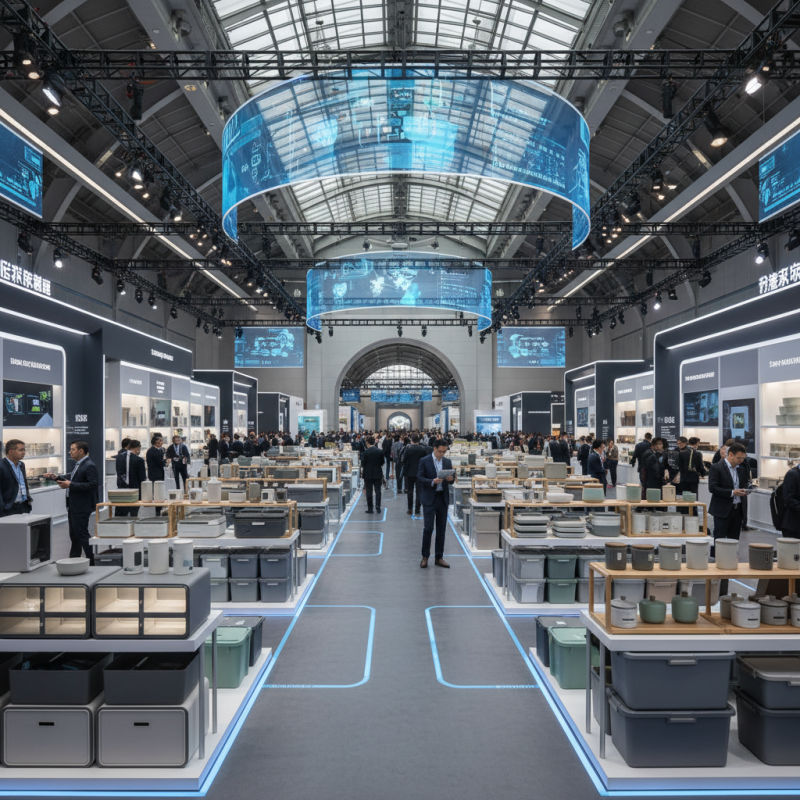
As we approach 2026, the landscape of storage containers is set to evolve rapidly. Emerging materials are at the forefront of this change. Recycled plastics are gaining traction. They offer a lightweight, durable option for various storage needs. Additionally, bioplastics are becoming popular. These alternatives are not only eco-friendly but also provide flexibility in design.
Metal and wood continue to play significant roles too. However, their use is being optimized. Lighter metals are being mixed with polymers for improved strength. Wood treated with modern coatings can resist moisture better. This ensures longevity while maintaining an aesthetic appeal.
Tips: Consider the environment when choosing materials. Look for options that reduce waste. Think about the physical characteristics you need—weight, durability, and ease of use. Don't overlook how these materials can influence storage solutions. Functionality and style should go hand in hand.

The storage container industry is experiencing a significant shift towards innovative designs. These designs are not just aesthetic; they directly impact functionality and user experience. According to a recent report by Technavio, the global storage container market is expected to grow by over 4% annually from 2023 to 2026. This is driven by the demand for smarter, more sustainable solutions.
One emerging trend is the integration of modular and collapsible designs. This allows consumers to save space when containers are not in use. Data from Market Research Future highlights that these types of designs are projected to dominate 60% of the market by 2026. However, the challenge remains in balancing durability with flexibility. Many consumers still question how well these designs perform under stress.
Another trend focuses on eco-friendly materials. Many companies are exploring biodegradable and recyclable options. A survey indicated that 70% of consumers prioritize sustainability in their purchasing decisions. Yet, it's important to reflect on the trade-offs—certain sustainable materials may compromise strength or longevity. Adapting to these innovative designs requires careful consideration. The future of storage containers will blend style, sustainability, and practical use, but it is a work in progress with ongoing debates on optimal materials and designs.
Sustainability in storage container manufacturing is increasingly important. Many manufacturers are exploring eco-friendly materials. Recycled plastics and metals are becoming more common. These elements substantially reduce waste. However, the integration of sustainable practices can be challenging.
Using solar energy in production facilities is one trend gaining traction. Companies are striving to lower their carbon footprints. The initial investment can be significant, causing hesitation for some. New strategies must be embraced to justify these costs. It’s a complex balance between affordability and sustainability.
Moreover, the life cycle of storage containers is critical. Many containers are not designed for long-term use. This leads to increased waste. Companies need to rethink their designs for durability. A focus on repairable or reusable containers could mitigate these issues. The industry must ask tough questions about the future and its environmental impact.
The 139th Canton Fair is set to showcase exciting trends in storage containers, focusing on smart storage solutions. Technological advancements significantly impact how consumers interact with storage. Connected systems allow users to track their inventory easily. Sensors can detect temperature and humidity levels. This ensures that items remain in optimal conditions.
Smart storage solutions often employ mobile apps for convenience. Users can access their storage status at any time. However, the dependency on technology raises questions about data privacy. What happens if these systems are hacked? Consumers might face potential risks.
Moreover, the design of smart storage containers is evolving. They are becoming more sleek and functional. Yet, some still struggle with user-friendliness. Complex features can discourage potential customers. It's a balancing act between innovation and practicality. As we move towards 2026, understanding these nuances is crucial for manufacturers and consumers alike.
The storage container market is evolving rapidly. A recent report predicts significant growth by 2026. Consumers increasingly seek sustainable and multifunctional options. The trend is driven by rising environmental awareness. According to industry analysts, 70% of consumers prefer eco-friendly materials. This shift compels manufacturers to innovate.
Functionality remains crucial. Containers that can serve multiple purposes are gaining traction. Data suggests that modular designs will see a 40% increase in demand. Features like stackability and portability are essential for urban living. However, it remains a challenge for many brands to meet these expectations.
Cost efficiency is another key factor. While consumers desire high-quality containers, they also budget carefully. Reports indicate that 55% of consumers prioritize affordability. Companies must balance quality with price to remain competitive. The road ahead may be difficult, with varying consumer expectations. Brands need to adapt swiftly to these trends while maintaining product integrity.
INFORMATION CENTER
RESOURCES & MORE
INSPIRATION FOR YOU
© Copyright 1981 - 2025 | California Patio™ All Rights Reserved

